Soil, Cement, Concert, Bitumen, Aggregate, Testing Instruments.
Monday - Saturday 9:00AM - 8:00PM
Call us Now: 9920229893 / 9867313893


Survey Equipments
Survey Equipments
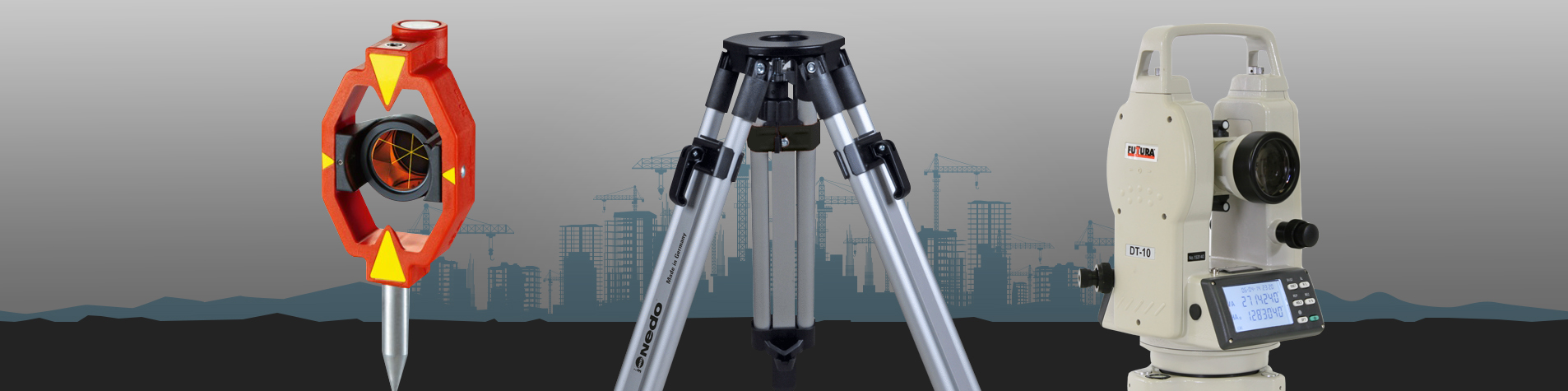
Survey Equipment
Survey equipment plays a vital role in the field of land surveying, providing the tools necessary to measure and map the Earth's surface. This equipment is essential for construction projects, land development, environmental assessments, and various engineering applications.
Total Stations
- Description: Total stations are advanced instruments that combine an electronic theodolite with an electronic distance measuring device (EDM).
- Uses: They are essential for measuring angles and distances, allowing construction professionals to establish control points and create accurate site layouts.
Levels
- Description: This includes both optical and laser levels that help determine elevation.
- Uses: Levels are crucial for ensuring that foundations, floors, and other structural elements are built to the correct height and slope.
GPS Equipment
- Description: Global Positioning System devices provide precise location data using satellite signals.
- Uses: GPS is particularly useful for large construction sites, enabling accurate mapping and positioning of structures.
Theodolites
- Description: Theodolites measure horizontal and vertical angles.
- Uses: They are often used in the layout of building foundations and in establishing reference points for construction.
Measuring Tapes and Chains
- Description: Simple yet effective tools for linear measurements.
- Uses: Used for quick measurements on-site, especially in preliminary stages of construction.
Drones
- Description: Unmanned aerial vehicles equipped with high-resolution cameras and sensors.
- Uses: Drones are increasingly used for aerial surveys, providing comprehensive site analysis and monitoring project progress.
Importance of Survey Equipment in Construction
Accuracy: Precise measurements are critical in construction to ensure that structures are built according to specifications. Survey equipment minimizes the risk of errors that can lead to costly rework.
Efficiency: Modern surveying tools, such as total stations and GPS, streamline the surveying process, allowing for faster data collection and analysis. This efficiency translates to quicker project timelines.
Cost Savings: Accurate surveys help avoid expensive mistakes during construction. By identifying potential issues early in the planning phase, construction teams can save time and resources.
Safety: Proper surveying helps ensure that construction sites are safe for workers. Accurate measurements reduce the risk of structural failures and other hazards.
Regulatory Compliance: Many construction projects require adherence to local regulations and zoning laws. Survey equipment helps ensure compliance by providing precise data necessary for permits and inspections.
Conclusion
Survey equipment is indispensable in the construction industry, providing the tools needed for accurate measurements and effective project management. As technology continues to advance, the capabilities of survey equipment will further enhance construction practices, ensuring safer and more efficient building processes. Understanding the various types of survey equipment and their applications is crucial for construction professionals aiming to deliver high-quality projects.